






Janet Sobel: War | Volodymyr Havrysh
by
Rodovid
ISBN: 978-617-7482-56-6
Regular price
- Unit price
- / per


Janet Sobel: War | Volodymyr Havrysh
by
Rodovid
ISBN: 978-617-7482-56-6
Regular price
- Unit price
- / per
Cover: Hardcover
Number of pages: 104
Language: Ukrainian and English
Published: 2023
Dimensions: 26.0 x 20.5
Genres: All, Books about contemporary art, Non-fiction books, Rodovid
Delivery 1-3 days
Secure payment
Quantity selected exceeds current stock
Shipping calculated at checkout.
"In the 1940s, against the backdrop of modernists' interest in the subconscious, original self-taught art was in trend. On this wave, Sobel experienced a rapid rise to fame in the New York art scene. It became clear almost immediately that in the person of Janet Sobel, the art world had encountered not just another curiosity, but a completely unique and high-quality creative phenomenon. Through the efforts of her son, the artist met the outstanding philosopher, psychologist, and educator John Dewey, gallerist and collector Sidney Janis, and artist Marc Chagall.
Around this time, in the early 1940s, Sobel also befriended the surrealist Max Ernst. Newspapers relished the details of the artist’s bourgeois life and mockingly recounted stories of Janet’s inspired treatment of the great artist with her own baked chicken. Max Ernst evidently liked more than just the chicken, as he introduced Janet to his wife, the gallerist Peggy Guggenheim.
Thanks to this acquaintance, Sobel took part in a number of key exhibitions for the history of American modernism, and above all in Peggy Guggenheim's project "Art of the Century", which presented new American art and became a new stage for the era. Janet had personal presentations in New York galleries and participated in group shows. Mark Rothko wrote letters to the artist regarding the organization of one of the exhibitions at the Peggy Guggenheim space. At this stage, Sobel's works were only occasionally called primitive, instead proclaiming the author a surrealist.
In the mid-1940s, the artist's work underwent a significant transformation: she moved from figurative to partial or complete abstraction. It was thanks to this period that Sobel entered the history of American art. Critic Clement Greenberg recognized that the work of Sobel, which he saw at one of the exhibitions, was the first painting made in the spirit of allover painting - this is a very high assessment, given the importance of this approach for the history of American post-war art. In the late 1960s, the author of a biographical investigation about Jackson Pollock, an authoritative art critic and curator who was just beginning his long-term collaboration with the MoMA museum, William Rubin, called Janet Sobel's works a source of inspiration for Pollock's experiments in the drip painting technique. Two works of the artist ended up in the MoMA collection, but, unfortunately, this was the end of the art world's recognition of the unique author.
Over the past decades, Sobel's name has gradually returned to the field of view of specialists, however, only today, more than fifty years after the artist's death, the time has come for a full-scale rethinking of her legacy in the context of revising the patriarchal version of the history of American modernism and 20th-century art in general."
With an essay by Alisa Lozhkina
Post
Share
Pin it
Adding product to your cart
You may also like


Brave to Bring the Light / Brave to Bring the Light. Photo book about the most difficult winter in the history of independent Ukraine The team of authors
₴1,900.00
- Unit price
- / per
₴1,900.00
- Unit price
- / per


Politics for Beginners. Part II
₴750.00
- Unit price
- / per
₴750.00
- Unit price
- / per
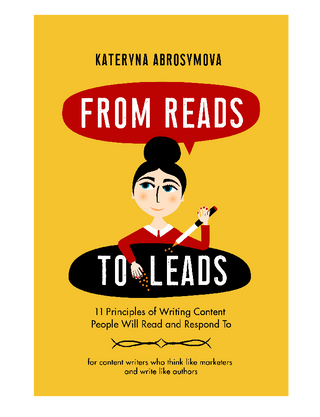
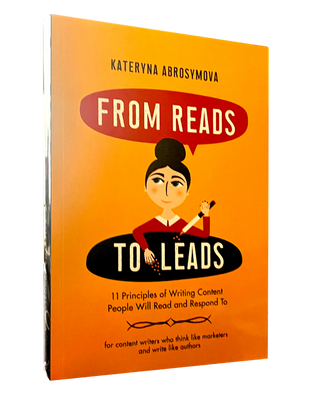
From Reads To Leads. 11 Principles of Writing Content People Will Read and Respond To Kateryna Abrosymova
₴1,300.00
- Unit price
- / per
₴1,300.00
- Unit price
- / per


Telegraph. Tomorrow
₴1,600.00
- Unit price
- / per
₴1,600.00
- Unit price
- / per


The Package Design Book Julius Wiedemann
₴912.00
- Unit price
- / per
₴912.00
- Unit price
- / per


Severodonetsk. Reports from the past Svitlana Oslavska
₴350.00
- Unit price
- / per
₴350.00
- Unit price
- / per
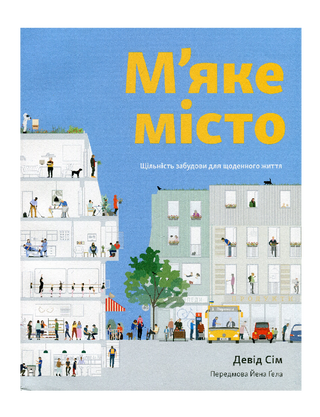

Soft city. Building density for everyday life David Sim
₴870.00
- Unit price
- / per
₴870.00
- Unit price
- / per


Foundations. Graphic design 03: Generating ideas Gavin Ambrose, Neil Leonard
₴550.00
- Unit price
- / per
₴550.00
- Unit price
- / per


Foundations. Graphic Design 02: Design Research Gavin Ambrose, Neil Leonard
₴550.00
- Unit price
- / per
₴550.00
- Unit price
- / per


Confessions of a heterosexual who was behind his time Frederick Bagbeder
₴259.00
- Unit price
- / per
₴259.00
- Unit price
- / per
Your product's name
Product subtitle
Regular price
₴29.99
₴19.99
- Unit price
- / per
Regular price
₴29.99
₴19.99
- Unit price
- / per
Your product's name
Product subtitle
Regular price
₴29.99
₴19.99
- Unit price
- / per
Regular price
₴29.99
₴19.99
- Unit price
- / per
Your product's name
Product subtitle
Regular price
₴29.99
₴19.99
- Unit price
- / per
Regular price
₴29.99
₴19.99
- Unit price
- / per
Your product's name
Product subtitle
Regular price
₴29.99
₴19.99
- Unit price
- / per
Regular price
₴29.99
₴19.99
- Unit price
- / per
Your product's name
Product subtitle
Regular price
₴29.99
₴19.99
- Unit price
- / per
Regular price
₴29.99
₴19.99
- Unit price
- / per
Your product's name
Product subtitle
Regular price
₴29.99
₴19.99
- Unit price
- / per
Regular price
₴29.99
₴19.99
- Unit price
- / per
Your product's name
Product subtitle
Regular price
₴29.99
₴19.99
- Unit price
- / per
Regular price
₴29.99
₴19.99
- Unit price
- / per
Your product's name
Product subtitle
Regular price
₴29.99
₴19.99
- Unit price
- / per
Regular price
₴29.99
₴19.99
- Unit price
- / per
Your product's name
Product subtitle
Regular price
₴29.99
₴19.99
- Unit price
- / per
Regular price
₴29.99
₴19.99
- Unit price
- / per
Your product's name
Product subtitle
Regular price
₴29.99
₴19.99
- Unit price
- / per
Regular price
₴29.99
₴19.99
- Unit price
- / per
Go to section
Your product's name
Product subtitle
Regular price
₴29.99
₴19.99
- Unit price
- / per
Regular price
₴29.99
₴19.99
- Unit price
- / per
Your product's name
Product subtitle
Regular price
₴29.99
₴19.99
- Unit price
- / per
Regular price
₴29.99
₴19.99
- Unit price
- / per
Your product's name
Product subtitle
Regular price
₴29.99
₴19.99
- Unit price
- / per
Regular price
₴29.99
₴19.99
- Unit price
- / per
Your product's name
Product subtitle
Regular price
₴29.99
₴19.99
- Unit price
- / per
Regular price
₴29.99
₴19.99
- Unit price
- / per
Your product's name
Product subtitle
Regular price
₴29.99
₴19.99
- Unit price
- / per
Regular price
₴29.99
₴19.99
- Unit price
- / per
Your product's name
Product subtitle
Regular price
₴29.99
₴19.99
- Unit price
- / per
Regular price
₴29.99
₴19.99
- Unit price
- / per
Your product's name
Product subtitle
Regular price
₴29.99
₴19.99
- Unit price
- / per
Regular price
₴29.99
₴19.99
- Unit price
- / per
Your product's name
Product subtitle
Regular price
₴29.99
₴19.99
- Unit price
- / per
Regular price
₴29.99
₴19.99
- Unit price
- / per
Your product's name
Product subtitle
Regular price
₴29.99
₴19.99
- Unit price
- / per
Regular price
₴29.99
₴19.99
- Unit price
- / per
Your product's name
Product subtitle
Regular price
₴29.99
₴19.99
- Unit price
- / per
Regular price
₴29.99
₴19.99
- Unit price
- / per
Go to section
By completing this form, you are signing up to receive our emails and you can unsubscribe at any time.
Availability
[label]
🔴
[message]
[img]
[title]
[message][subMessage]
Мій список обраного
Choose email method
Загальна сума у списку бажань: [totalPriceWishlist]
Сподобалась книга? Додайте її до свого списку обраних книг
Тут будуть відображатись книги, які ви додали до обраних
[img]